
Home → About
Cardox India Private Limited — manufacturer and service provider for the Cardox CO2 System and the Whipping System, and India's specialist in silo, bunker and hopper cleaning without human entry.
Over more than 30 years we have cleared upwards of 500 silos, bunkers, hoppers and furnaces across India, Saudi Arabia, the UAE, Egypt, Bangladesh and Vietnam — and not one of those jobs required a person to enter the vessel.
That is the whole proposition. Every plant knows how to clean a silo the old way: a shutdown, a confined-space permit, breathing apparatus, a rescue standby team, and someone going in with a rod to break material loose above their own head. It works until the day it doesn't.
We combine two systems. The Whipping System works mechanically from the top hatch, cleaning wall coating with rotating chain and hammer whipsets at 800–1,000 rpm. The Cardox CO2 System breaks hardened blockages that no mechanical whip will move — liquid CO2 energised electrically, expanding to 600 times its volume at up to 40,000 psi.
Neither requires anyone inside the vessel. Neither uses explosives, so neither requires blasting licences, magazine storage or statutory notifications.
Cardox India is a manufacturer and service provider for the Cardox System and the Whipping System. We build the whipping equipment our own crews take to site — and we now supply that equipment to buyers worldwide, with commissioning, operator training and spares direct from us rather than through a distribution chain.
It matters that we run the machines ourselves. Every design decision in our equipment came from something that went wrong on a real job, in a real vessel, with a plant waiting to restart. That is knowledge a trading company cannot sell you.
| Sector | Typical work |
|---|---|
| Cement | Clinker, raw meal, blending and cement silos; preheater towers, cyclones, riser ducts, rotary kilns, coolers |
| Steel & sponge iron | Sinter, DRI and slag hoppers; flux bunkers; blast furnace applications |
| Power | Coal and pet coke bunkers; fly ash silos and ash hoppers |
| Chemicals & fertiliser | Soda ash, rock phosphate, lime and feed-grade powder silos |
| Mining & quarrying | Boulder breaking, dimensional stone extraction, ore hoppers |
| Civils | Rock excavation, trenching, shaft sinking and concrete demolition where blasting is restricted |
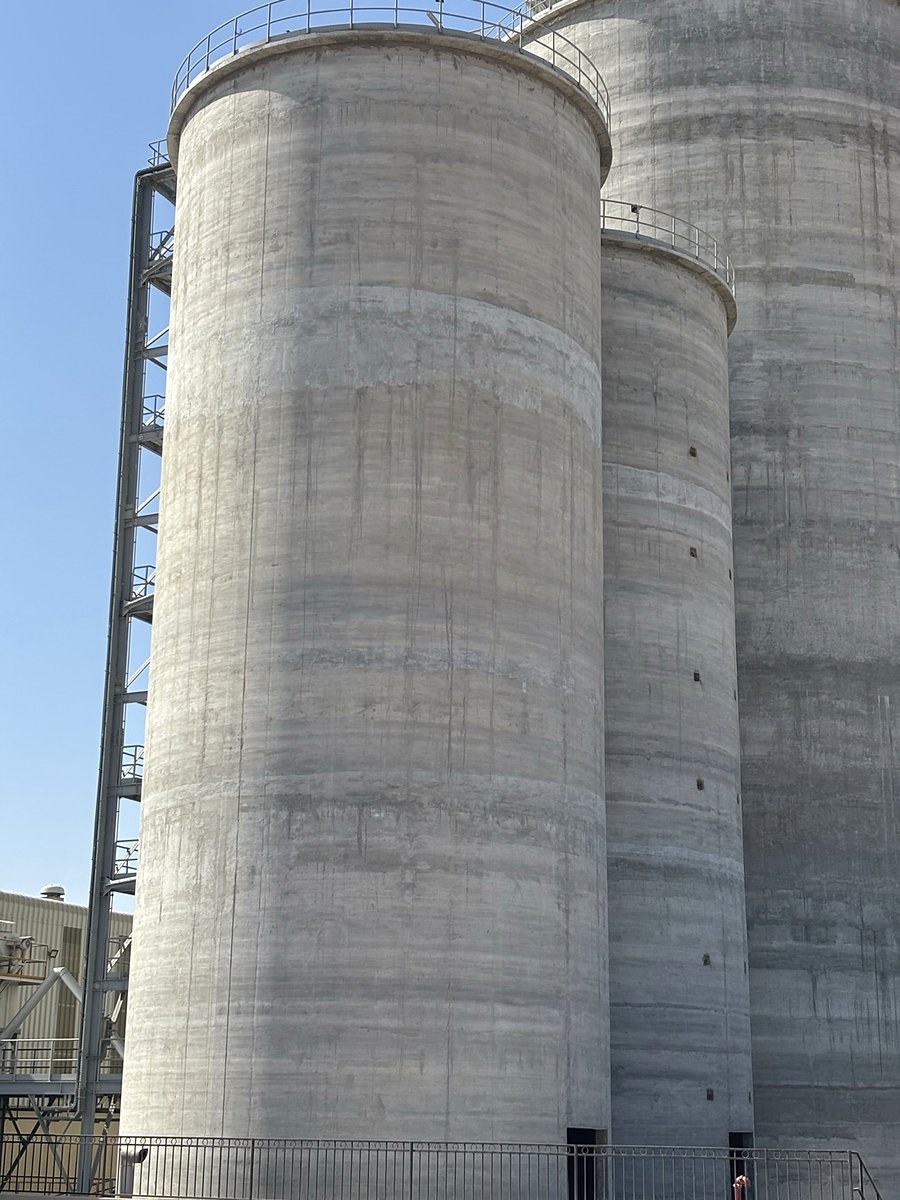
We clean vessels for ten of India's largest cement producers — UltraTech, ACC, Ambuja, Dalmia, Shree, Ramco, JK Cement, India Cements, Heidelberg and Chettinad. We also work for steel producers, thermal power plants, waste-to-energy plants, fertiliser and chemical manufacturers, mines and quarries, and civil contractors.
Internationally we have worked in Saudi Arabia, the United Arab Emirates, Egypt, Bangladesh and Vietnam, and we supply equipment into the Middle East, Africa and South-East Asia. We mobilise worldwide, and fast — a blocked vessel is lost production every hour it stays blocked.
For confined-space-adjacent work, the safety certification is the one that matters. It is what lets a plant's HSE department sign us onto site without an argument.
Every plant already knows how to clean a silo the old way. This is what the two approaches actually cost you, side by side.
| Manual cleaning | Cardox India | |
|---|---|---|
| People inside the vessel | Up to 30 workers, entering a confined space | None. Nobody crosses the vessel opening |
| Time on site | Up to 8 days for a kiln ring | Hours to a few days |
| Crew size | A full gang, plus supervision | One or two operators |
| Permits & standby | Confined-space permit, gas testing, breathing apparatus, rescue standby team | None of it. Standard equipment isolation only |
| Kiln cool-down | Shut down and wait — then heat back up again | Works at full operating temperature |
| Can it run during production? | No. The plant stops | Yes, where wall sockets are fitted |
| Scaffolding inside | Usually required, and erected in the hazard | None. Access is the existing top hatch |
| Risk of falling material | People positioned beneath a suspended mass | Nobody is ever underneath it |
| Damage to the vessel | Chipping and hammering against concrete, liners and welds | Non-destructive. Discharge aimed away from the wall |
| The material removed | Often handled out separately as waste | Discharges through your own outlet — recovered stock |
| Repeat visits | The same shutdown, the same gang, next campaign | Sockets stay fitted. Next time is a tube, not an outage |
Manual figures are the industry reference for rotary kiln ring removal. Your numbers will vary with vessel size, material and access — we confirm them at survey.
Confined-space entry into a bulk storage vessel kills people every year, and it kills them the same way each time: someone goes in to break a blockage loose, and the material above them lets go. Our entire method exists to remove that moment from the job.
No entry permit, no breathing apparatus, no rescue standby team, no gas testing regime. Manual ring removal can put up to 30 people inside for 8 days; our crew never crosses the plane of the vessel.
Nobody is ever positioned beneath a bridge, arch or rathole that can collapse without warning.
Kiln and preheater work is done from outside the shell. No exposure to process heat or vitiated atmosphere.
No blasting licence, no magazine, no police notification, no special storage or transport permits.
Used in underground mines and on coal, pet coke, grain and fine powders, where the process must not disturb the stored product.
The tube is locked into a sealed coupler assembly and fired remotely. Operators stand well clear, unlike shotgun or water-injection methods.
No shock wave transmitted to refractory, liners, adjacent equipment or neighbouring buildings.
The discharge is carbon dioxide, an inert gas. No post-blast clearance wait, no product contamination.
Ask any contractor one question: "does anyone go inside?" If the answer involves a permit, a harness and a standby rescue team, you are being sold a risk, not a service. Our answer has been no for more than 30 years and 500+ vessels.
Quality management system certified.
Occupational health & safety management certified — the standard that matters most for confined-space work.
Dislodged product returns through your own outlet. Recovered stock, not disposal cost.
Most plants only buy this service every few years, so there is no easy way to judge who is competent. These are the questions worth asking — and our answers.
No. Never has. If the answer involves a confined-space permit, a harness and a rescue standby team, you are being sold a managed risk rather than a method that removes it.
We manufacture both systems ourselves. Every design decision came from something that went wrong on a real job — knowledge a contractor hiring in equipment cannot offer.
30+ years. 500+ silos, bunkers and hoppers, across 55+ plants and 20+ industrial groups in six countries.
ISO 9001:2015 and OHSAS 18001. For work next to confined spaces, the safety certification is the one your HSE department will ask for.
Ten of India's largest cement producers — UltraTech, ACC, Ambuja, Dalmia, Shree, Ramco, JK, India Cements, Heidelberg and Chettinad — plus leading steel producers, thermal power plants and chemical manufacturers we hold in confidence.
No. Vessel type, material, build-up hardness and access all change the approach. Anyone quoting a silo blind is guessing, and the difference shows up as a variation order.
We film every job. You get footage of what the vessel looked like before and after, from inside. No competitor in this market shows you that.
It discharges through your own outlet. For cement, coal and ore that is recovered saleable product, not a disposal cost.
The one question that settles it. Ask what happens if the vessel turns out to be worse than the survey suggested. Our answer is that the whipset changes and the Cardox tube count changes — not the method, and not the safety case. Nobody ends up going in because the job got harder.
Cement is our largest sector. It is not the limit of it — these industries are a substantial part of what we do.
Sinter, DRI and slag hoppers, flux bunkers, blast furnace hearth work, uptake pipes and gas-cleaning plant — cleared hot where the process allows it.
Coal and pet coke bunkers, fly ash silos and ash hoppers. The Cardox CO2 System is used here because the discharge is cold and the gas it releases is inert.
Rock phosphate, soda ash, lime and feed-grade powder silos — hygroscopic materials that cake hard from ambient humidity alone.
Ore hoppers and surge bins, plus rock breaking and excavation where blasting is restricted — no explosives, so no licence, magazine or statutory notification.
Twenty-plus industrial groups in six countries. Tell us the vessel and the material and we will tell you exactly how we would approach it.
Tell us what is stuck and we will tell you how we would clear it.