
A coal bunker rarely fails all at once. It loses capacity quietly — a layer on the wall, then a rat-hole, then a throat that hangs up every few shifts — until the feeder is starving and the mill is tripping, and nobody can say exactly when it started.
This is why whipset selection matters more here than anywhere else. We run bronze chain whipsets in coal and pet coke vessels. The Cardox CO2 System is inherently safe alongside them — the rapid gas release refrigerates the discharge rather than heating it, so nothing is added to the bunker.
| Symptom | What is happening |
|---|---|
| Feeder starves, mill trips | A hang-up in the bunker throat. Coal above it is not moving at all. |
| Bunker reads full but empties fast | Rat-holing. You are cycling a narrow channel while the bulk sits caked on the wall. |
| Bunker never runs down fully | Dead stock keyed to the wall. It has not moved in months and will not move on its own. |
| Wet coal, monsoon months | Moisture binds fines into a plastic mass that bridges across the outlet and sets hard. |
| Repeated poking from the access door | The manual fix — and the one that puts a person under a suspended mass of coal. |
Coal arriving wet behaves nothing like coal arriving dry. Moisture binds the fines into a plastic mass that will not flow, bridges across the outlet, and then sets against the wall as it dries in place. What was a manageable layer in March becomes a structural problem by September.
This is why bunker cleaning is worth scheduling rather than reacting to. A bunker cleaned before the monsoon holds its capacity through it; a bunker left until it blocks costs an unplanned outage at the worst possible time.
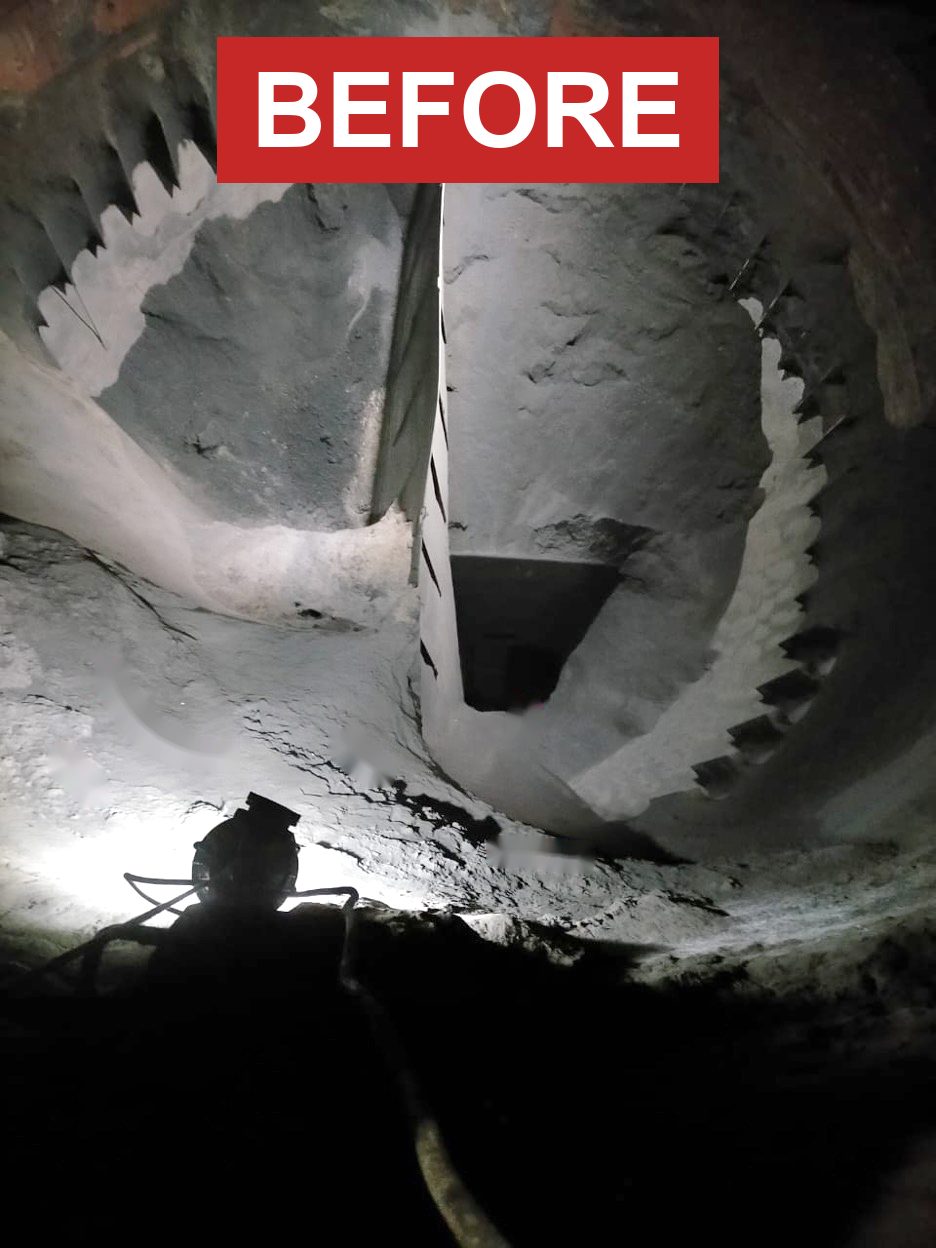
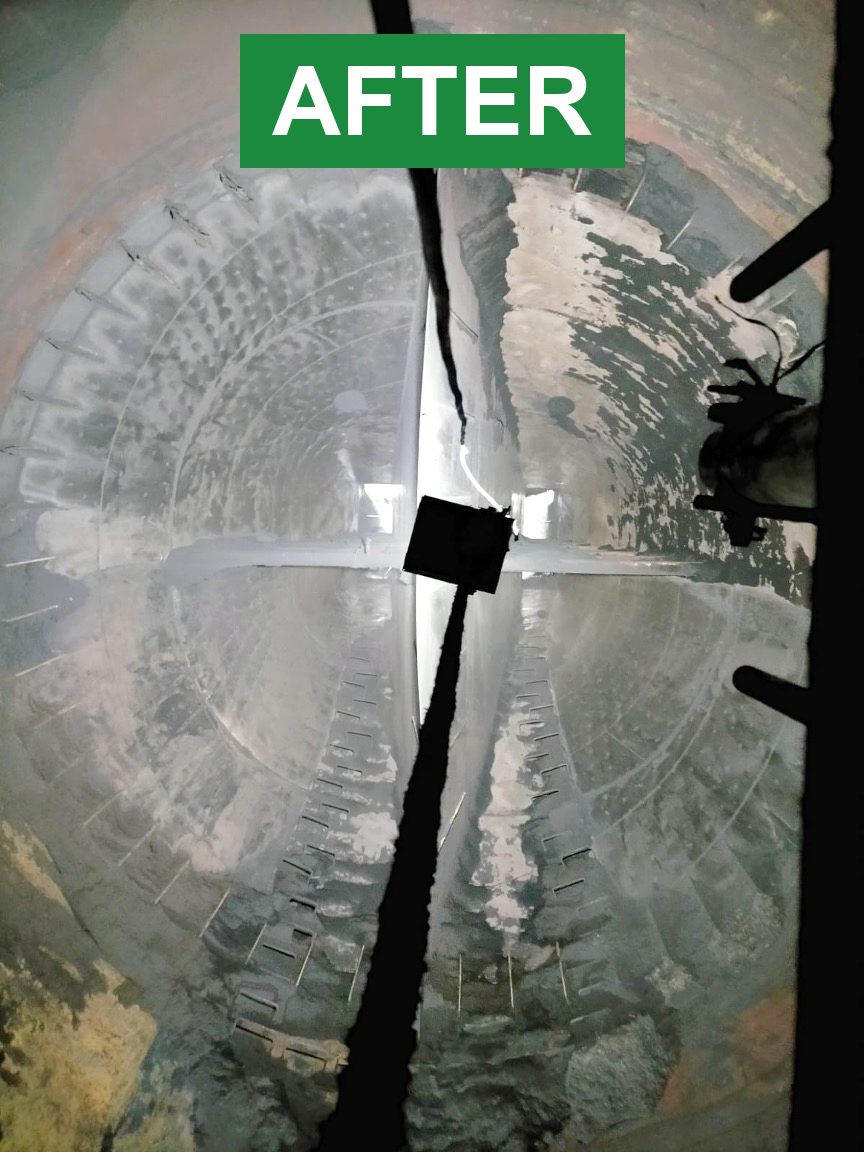
Reference job. Three 380-tonne coal bunkers, cleaned in five days total, with zero confined-space entry.
Pet coke bunkers and silos, lignite, biomass and coke. Pet coke behaves differently from thermal coal — stickier and far more prone to plating on the wall — and usually needs a heavier whipset and more Cardox work at the outlet.
Or read the 59 most common questions →
Send the vessel size, the material and how long it has been a problem. We will come back with an approach, a duration and a price.
Plant already down? Mark your message EMERGENCY — we mobilise.