Cement
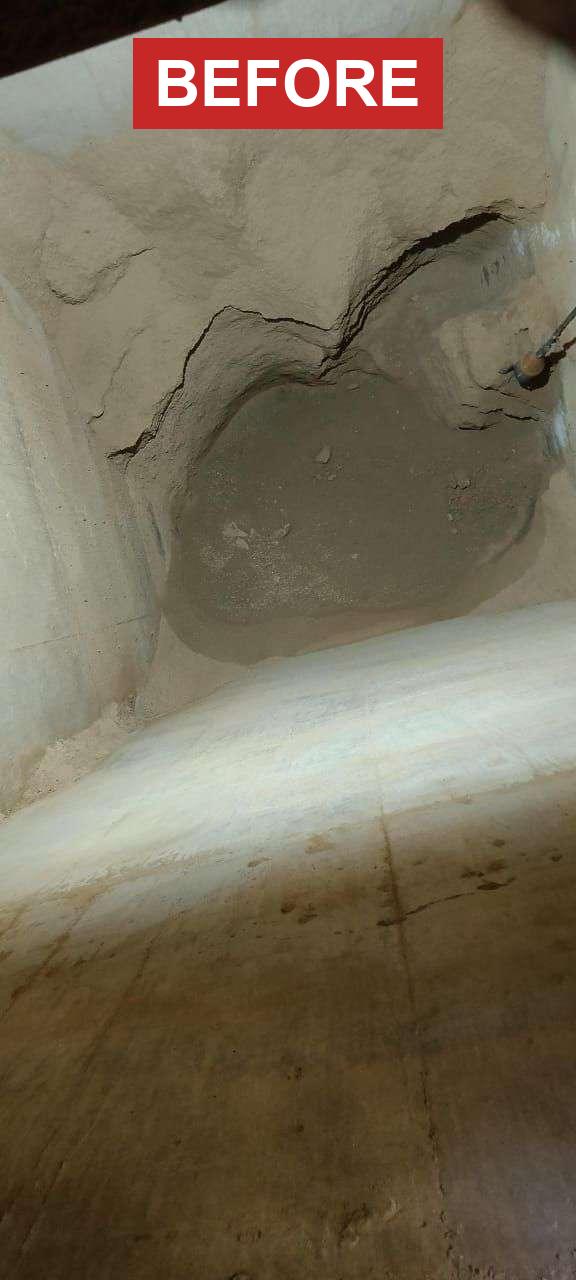
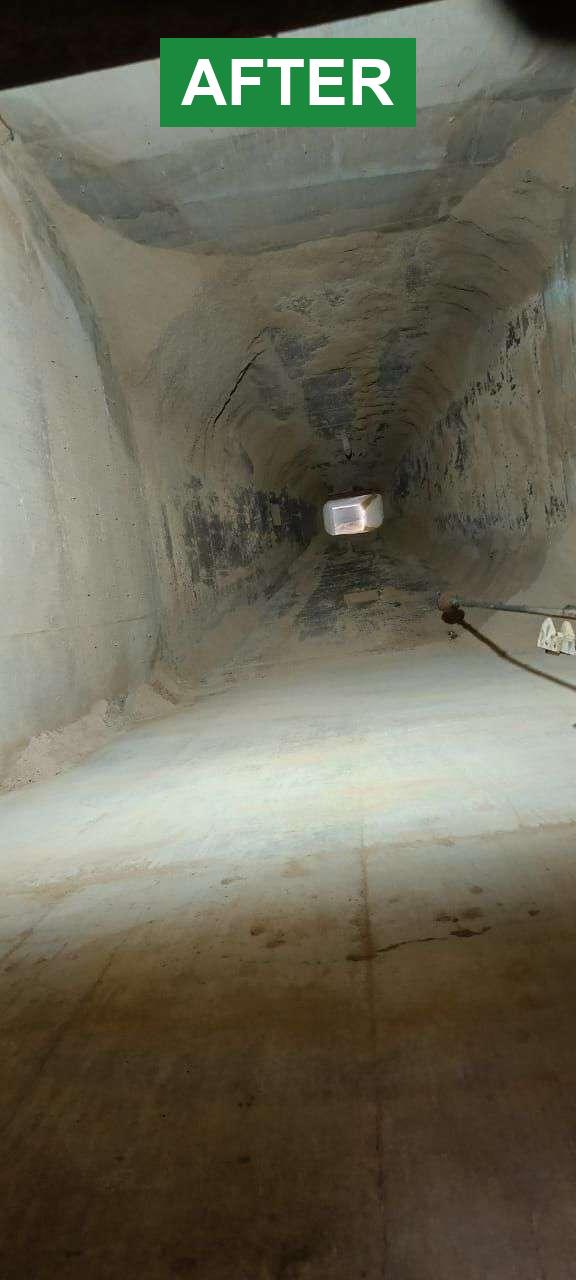
Our core work. Cement is hydraulic — it does not just cake when it meets moisture, it reacts and hardens against the wall.
Cement silo cleaning
Home → Materials & applications
From 100 MT hoppers to 25,000 MT storage silos, up to 60 metres tall — and every material we have met in more than 30 years.
Small hoppers and bunkers of 100–200 MT, right up to 25,000 MT bulk storage silos.
Vessel height is not a limitation. We work from the roof down, whatever the depth.
Every size, every material, every time — the crew stays outside the vessel.
Each material fails in its own way — fly ash bridges because it takes up moisture, wet coal bridges and plates onto the wall, soda ash sets like concrete, phosphate grinds the vessel. These are the ones we are asked for most.
Our core work. Cement is hydraulic — it does not just cake when it meets moisture, it reacts and hardens against the wall.
Cement silo cleaningHang-ups, rat-holes and wet-coal bridging. Dead stock keyed to the wall that has not moved in months.
Coal bunker cleaningFine, abrasive and hygroscopic. Sets against the silo wall and quietly takes your ash storage capacity with it.
Fly ash silo cleaningStored hot. Residual heat and condensation hydrate the free lime against the wall, and the coating thickens across a whole campaign.
Clinker silo cleaningThe one silo where cleaning is a quality problem, not a capacity problem. Dead zones destroy the blending the vessel was designed to deliver.
Raw meal & blending silosCalcium sulphate is what plaster is made from. Given moisture and time against a wall, it does exactly what plaster does.
Gypsum silo cleaningThe most aggressively caking material we handle. Pulls moisture from the air and re-crystallises into a solid mass keyed to the wall.
Soda ash silo cleaningHygroscopic and abrasive at the same time — it cakes hard, and the vessel wall is usually too worn for aggressive tooling.
Rock phosphate cleaningFuses solid in the pit when air-cooled; cakes in the silo when granulated, because it brings its own moisture in with it.
Slag hopper & silo cleaningSteel plant hoppers — hotter, heavier and more abrasive, cleared in short windows against a running plant.
Steel plant hoppersCoarser and heavier than fly ash. It packs into the hoppers at the bottom of the ash line, where the outage window is shortest.
Thermal power plantsFly ash mixed with the hydrated lime injected to scrub acid gases. Take up any moisture and it sets like a weak cement.
Waste-to-energy cleaningIf yours is not here, ask — this is what we are asked for most, not the limit of what we handle.
We inspect through the top hatch, establish where the build-up sits and how hard it is, and agree isolation and lock-out with your maintenance team.
Rotating chain and hammer whipsets at 800–1,000 rpm clean coating from the wall without gouging concrete, liners or welds.
Where material has set beyond mechanical whipping, the Cardox System breaks it in milliseconds — over 3 tonnes per tube.
Dislodged material leaves via your normal outlet and conveying system. Recovered product, not disposal cost.
Typical duration runs from a few hours to a few days, depending on vessel size and how hard the build-up has set. As a reference point, we cleaned three 380-tonne coal bunkers in five days total, with zero confined-space entry.
Send the vessel type and capacity, the material stored, and how long it has been a problem. We will tell you which system clears it, how long it takes and what it costs.
Request a Site Visit